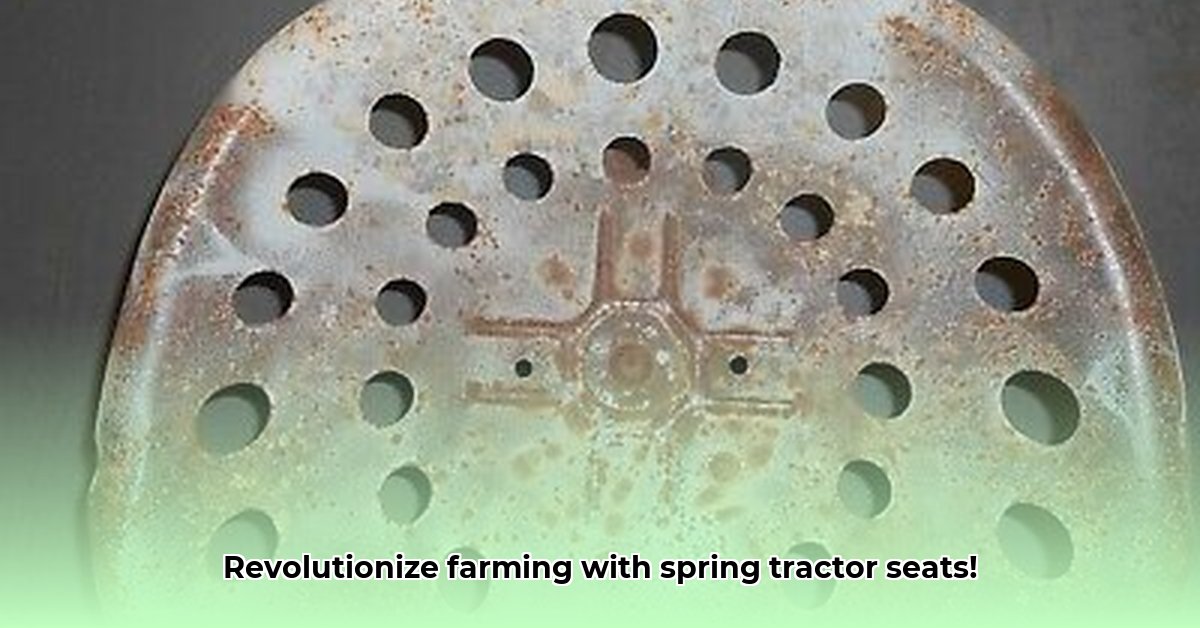
Spring Tractor Seats: The Key to a Comfortable and Productive Farming Season
Farming demands long hours of hard work, often spent navigating uneven terrain. This constant jarring can lead to back pain, fatigue, and reduced productivity. But what if a simple upgrade could significantly improve your comfort and boost your efficiency? The answer lies in upgrading your tractor seat's springs. This isn't just about comfort; it's an investment in your well-being and the long-term success of your sustainable farming operation. This article will guide you through choosing, installing, and maintaining high-quality spring tractor seats for a more comfortable and productive farming experience. For more in-depth information, check out this helpful resource on tractor seat suspension.
Why Spring Tractor Seats Are a Game Changer for Sustainable Farming
Consider this: farmers spend countless hours operating their tractors. Ergonomic seating isn't a luxury—it's crucial for physical well-being and operational efficiency. High-quality spring tractor seats offer superior cushioning and support, absorbing shocks and vibrations from uneven fields. This directly translates to reduced pain, fatigue, and increased energy to focus on your crops. Reduced fatigue leads to more productive days, potentially resulting in higher yields and reduced fuel consumption. It's a simple upgrade with wide-ranging benefits. But it's not just about individual comfort; a healthier, more rested farmer contributes to a more sustainable farming operation overall.
A comfortable seat allows for better concentration, leading to more precise fieldwork and less wasted resources. This heightened efficiency translates to less fuel consumption, reduced equipment wear and tear, and ultimately, a more sustainable and cost-effective operation. Isn't that a worthwhile investment? This is about building a future where farm productivity is enhanced alongside the well-being of the individuals who cultivate our food.
Finding the Perfect Spring Tractor Seat: A Step-by-Step Guide
Selecting the right spring tractor seat requires careful consideration of several factors. This step-by-step guide will help you make an informed decision tailored to your specific needs.
Step 1: Understanding Suspension Systems: The type of spring system is paramount. Coil springs (metal springs) offer reliable, consistent support, while air suspension systems provide a more customizable ride, allowing you to adjust firmness based on your preferences and the terrain. Air suspension seats excel on uneven ground, offering superior shock absorption, but typically demand more maintenance and carry a higher initial cost.
Step 2: Prioritizing Adjustability: Look for a seat with adjustable height, tilt, and lumbar support. Proper posture is key to preventing back pain. A fully adjustable seat allows you to find the optimal driving position for your body type, maximizing comfort and productivity. Don't you agree that the right posture is vital for a long and productive workday?
Step 3: Durability: A Long-Term Investment: Invest in a robust seat constructed from durable materials designed to withstand daily wear and tear. A higher initial investment in a long-lasting seat can save you money in the long run by reducing replacements.
Step 4: Choosing the Right Upholstery: Consider breathable fabrics to keep you cool during warmer months. Prioritize fabric durability, ease of cleaning, and of course, comfort.
Step 5: Safety First: Essential Features: A seatbelt is non-negotiable. Ensure the seat's construction is sturdy and meets all relevant safety regulations. Safety is paramount in any farming operation.
Maintaining Your Spring Tractor Seat: Simple Steps for Longevity
Regular maintenance ensures your spring tractor seat continues providing comfort and support for years to come.
Regular Cleaning: Regularly clean the seat to remove dust and debris. This prevents buildup and extends the seat's lifespan.
Lubrication: Periodically lubricate moving parts like hinges and adjustment mechanisms to prevent squeaking and ensure smooth operation.
Regular Inspections: Regularly inspect the spring system for any signs of wear or damage. Addressing minor issues promptly prevents major problems down the line.
Spring Tractor Seats: A Sustainable Choice
Investing in a high-quality, durable spring tractor seat directly supports sustainable agricultural practices. It reduces waste from frequent replacements. Consider seats made with recycled materials whenever possible. This investment benefits not only your farm's productivity but also the environment.
How to Choose Sustainable Tractor Seat Springs for Ergonomic Farming
Choosing the right springs is crucial for a comfortable and productive farming experience. This section explores the key factors to consider in your selection process.
Assessing Your Needs: Your weight and the type of terrain you work are primary factors to consider. Heavier operators will require springs with higher weight capacities, while rough terrain demands springs capable of absorbing more impact. Do you prefer a firmer, more supportive ride or a softer, more comfortable one? These preferences determine the spring's rate (the force needed to compress it). Striking this balance is key.
Understanding Spring Specifications: Look at the weight capacity of the springs (the maximum weight they can comfortably support) and their spring travel (how far they can compress). More travel generally equals a smoother ride, but excessive travel can lead to instability. Choosing the appropriate weight capacity and spring travel ensures optimal ergonomic support while driving the tractor.
The Sustainability Factor: A sustainable approach prioritizes durability, minimizing waste from frequent replacements. Look for springs constructed from recycled or sustainably harvested materials. Remember, a longer lifespan translates directly to less waste.
Step-by-step Guide: 1. Weigh yourself: Accurate weight is crucial for choosing the correct springs. 2. Assess your Terrain: Rough terrain requires stronger springs. 3. Determine Your Ride Preference: Firm or soft. 4. Find the Right Specs: Choose springs with a weight capacity exceeding your weight and sufficient travel. 5. Check Compatibility: Ensure the springs fit your tractor and seat. 6. Install Responsibly: Follow manufacturer instructions carefully.
Potential PTO Interference: Upgraded springs can sometimes interfere with the Power Take-Off (PTO) system. It is of utmost importance to thoroughly research the compatibility of your springs with your specific tractor model.